Revolution Reconsidered: William Cooper Nell’s Archive of Black Patriotism

Join Libricola in exploring The Colored Patriots of the American Revolution by William Cooper Nell!
Beacon Hill’s north slope, the heart of Boston’s Black community in the 1800s, has a block-long street of historic buildings called Smith Court. One pale yellow 18th-century (private) house, with a tall, twisting magnolia tree now in bloom, was probably an Underground Railroad site. It was also the home of the Black
abolitionist William Cooper Nell, who in the 1850s wrote The Colored Patriots of the American Revolution, one of the first history books authored by a Black American.
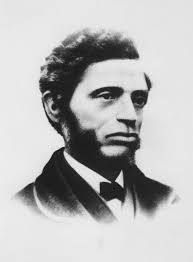
Nell also wrote for abolitionist newspapers, including both William Lloyd Garrison’s The Liberator and Frederick Douglass’s North Star, was an Underground Railroad activist, worked to desegregate Boston schools, aided Black Civil War recruitment, and founded literary clubs that integrated Boston’s intellectual life.
His book describes Black presence and contributions in America’s founding Revolutionary events, and then throughout early American culture. It uses these contributions to argue for abolition, and against misguided discrimination. It’s certainly a memorial to military service. Nell includes the biographies, accomplishments, and activism of hundreds of Black and Indigenous people.
After reading the Massachusetts chapter, I dipped into many others; it’s a good way to explore and enjoy this unique book. It isn’t one single narrative so much as a collage of historical materials, organized by state. If you’re like me, you’ll open to one page and read quite a few.
His collage includes text from many historical documents, famous and obscure—an archive of the voices of marginalized people and the voices of abolition. It’s a fascinating collection of American writing. The letters, speeches, petitions, government records, and journalism create a kaleidoscope of Nell’s early 19th-century world, and create a map of Black America made of words.
As April marks the anniversary of the Battles of Lexington and Concord in 1775, let me list some of the Revolutionary soldiers Nell introduces. Henry Hill, who died in 1833, “buried with the honors of war…was at the battle of Lexington, Brandywine, Monmouth, Princeton, and Yorktown.” Charles Bowles, servant to a colonial officer, at 16 enlisted as a soldier. He later received a pension, as did veterans Quack Matrick and Prince Richards. Philip Andrews deserted a British captain he served to join the American forces. Barnstable, MA, raised a regiment that included 27 Indigenous and Black men of Marshpee (now Mashpee). This was the Native American district that would eventually contain 73 widowed women of color. James Easton worked on Washington’s fortifications on Dorchester Heights during the Siege of Boston. Records outside Nell’s book list Black soldiers at Lexington, Concord, the Siege, and the Battle of Bunker Hill.
In a later chapter, Peter Harris of the Catawba tribe wrote to the South Carolina Assembly, “I fought against the British for your sake. The British have disappeared and you are free…The hand which fought for your liberty is now open for your relief.”
In the last chapter, Nell writes that “The Revolution of 1776…aided, in honorable proportion, by colored Americans ha[s] (sad, but true, confession) left the necessity for a second revolution, no less sublime…” In this year of celebrating 250 years since that first Revolution, we also have later ones to consider.


Comments